Reflections on wildlife and place, from my local patch and further afield.
Wildlife Encounters
Roe deer and main road
An A-road runs between our local park and nearby open fields dotted with dense woodland. The woods are a good place to go looking for deer or owls in the dusk, and the road is easily crossed at this time when traffic is sparse. One summer evening I approached the road at the same moment a young roe deer decided to cross the carriageway.
It cantered out confidently and gracefully from the wooded verge, crossed the tarmac and central reservation and arrived safely on the opposite pathway. But then it perceived me – and a young man in a summer trilby – walking on the same side of the road as its intended refuge, our strides closing down the space between us. Panic rose. The dainty legs pranced in angular indecision, at odds with the direction of the deer’s head and flanks. I slowed but the young man did not, and our deer fled up the grassy verge, seeking cover in the hedge above. But there was no gap here to melt into, so another surge of fear drove the pin-thin legs to bound away from us and down the hill, only to skitter to a halt again when faced with oncoming cars.
I held my ground,and my breath, as the deer took the only option for safety – to run back across all four carriageways. Its beauty and instinct for life shone in that dash; young and lone, an ochre whisp flashing across the traffic, its delicacy anointed by black-tipped hooves, nose and ears. It was fast enough, and leapt like the classic hart, lithe and light as a feather, through the veil of trees and back, I hope, to the guardian arms of Pan.
Quietening Skies

In 1994 I started commuting from Durham to a new job in Newcastle-upon-Tyne, and my short daily migration inspired me to properly explore my big city neighbour. I climbed Newcastle’s iconic bridges, came to admire its stately Georgian streets and at weekends appreciated from a safe distance the energy of its evening revellers. And as my first year there shaded into winter I found that Newcastle was host to even wilder and more raucous nightly gatherings than seen at its celebrated nightspots in the Bigg Market.
One January afternoon I emerged from the Theatre Royal, still half-occupied with the drama of the day’s matinee. But all thought evaporated under the clamour that met me on the streets. The sky above was somehow alive and in motion, endlessly churning with thousands of dark ragged shapes. They animated the dim blue dusk, moving as fluid swarms that boiled and swelled and slewed up high then instantly dipped down to sweep as giant shadows across the building fronts, fragmenting into inky blots as they hit the walls and windows overhead. I could see small shifting forms scattered on every ledge and suspended wire, and a pervasive high-pitched chattering attended the whole scene, an enveloping white noise of shrill squawks: the massed voices of urban starlings. I’d almost missed my train that night, walking so slowly in upward-gazing awe, my ears ringing with the incessant layered tcheeps of protest as birds squabbled for places on the high ledges.
Watching thousands of birds descend on the city most evenings, I became aware of the beauty of the buildings on which they settled. They tended to favour the classically-styled Georgian facades of Grey Street, Dean Street and Grainger Street, erected in the 1830s as part of a bold and elegant redevelopment of Newcastle’s commercial centre. I assumed that, for starlings, this array of decorated masonry had functional rather than aesthetic value: tall Classical or Gothic buildings are replete with ledges, eaves, cornices and richly ornamented stonework which provide generous niches sheltered from wind and rain. Grey Street’s attractions were its imposing and graceful terraces where starlings would nestle in orderly lines along the broad pediments and balustrades. In the massive portico of the Theatre Royal they wedged themselves among the wreaths of carved flowers atop each of six Corinthian pillars.
The urban habitats unwittingly created by its Georgian renaissance allowed Newcastle to host spectacular gatherings of starlings for over a century. From the late 1800s Northumberland’s stock of breeding birds grew rapidly year on year, and in winter they coalesced with migrant flocks from northern Europe to progressively staggering effect. In the 1960s and 70s nearly twenty thousand starlings made Newcastle their winter home, and over subsequent decades flock sizes more than tripled, often exceeding 80,000 birds. But municipal eyes began to frown upon the avian masses, and as numbers reached their astonishing heights the starlings’ favoured buildings were fitted with mesh to deny landing space and so protect the stonework and the public from the inevitable side effect of the vast roosts: guano. By the end of the 20th century, starlings’ saturation of the airspace around the Tyne would be confined to memory, and winter starling watchers had to head to coastal or suburban sites to seek the spectacle of tens of thousands of birds in united flight – though none of these roosts could rival the size of the city flocks at their peak.
Now, there is a gathering, grim coda to this story. Since Newcastle acted to evict its birds, it has become clear the expense of deterrents could likely have been saved: in Britain two-thirds of our breeding starlings have vanished in the past 50 years, and migrants are fewer too as parts of Europe also lose their populations at a relentless pace. Those who record the fortunes of our birds report the billowing clouds are ever-thinning. What has changed is that each year fewer survive to mature and breed; no-one knows exactly why as yet, but that same commonality which has whittled away the richness of ourwildlifeover the past century – the way we farm – may be implicated. Research is underway to tease out the causes of their poor survivorship, but it’s by no means certain that we’ll know how to help starlings regain ground before their decline becomes terminal. One source of cheer for today’s starlings can be found, however: as flocks have dwindled, concern to arrest the loss has swelled. Reports of local murmurations are now invariably shared online, drawing people out to stand in chill fields in the winter dusk, to scan the skies and marvel. There is a growing devotion to this voluble, feisty bird that moves in multitudes.
My own experience is that the force of their presence en masse is breathtaking. In those urban Newcastle twilights of 30 years ago, I became a bystander in the midst of another world, a privileged witness to an avian consciousness rapt to the flocking instinct. Yet there was some kind of kinship generated too in finding their daily drama staged in our own built space, where by happy accident we’d made a place they felt safe to sit out the winter nights. One memorable evening I arrived slightly early at Central Station and saw wave upon wave of birds roiling and sweeping across the sky until, surging like a shoal of fish caught in a sudden current, they ballooned at one point then burst over the building, raining down in dark ribbons to land in garrulous ranks on every ledge in the station portico. Scaffolding erected here had created a four-fold increase in available perches, and the station entrance, covered in green netting, was transformed into a huge, absurdly over-stocked aviary. On winter evenings now, the roost space belongs only to the few local pigeons, huddled silently beneath the station clock.
Can you describe a waxwing?
At Consett Leisure Centre on a mild November morning I joined the company of many patient birders who’d been summoned via the Bird Club grapevine. Our focus was a fringe of mature rowan trees by the car park. The trees were weighed down with ripe red berries and, beguilingly, for the past two days had become the playground and free buffet for an ever-growing flock of waxwings – migrants from Scandinavia which occasionally arrive in Britain en masse in years when berry crops are sparse due to a harder winter in their homeland. 2023 was one such year, and north-east England played delighted host to many hundreds of waxwings.
The birding crowd at Consett varied in character, from young chaps in camouflage-garb to ladies in their 60s in their town coats, but nearly all had brought cameras with immense lenses to capture close-ups of waxwing antics. That morning probably generated many new waxwing fans too: as the car park and road milled with camera-laden people, many passers-by asked what all the fuss was about, and upon being told they looked up proudly and replied that it was “good that Consett has something special”.
Waxwings are so popular because they are birds which – in both their appearance and manners – do nothing by halves. Here is how they looked and what they did during the marvellous half hour of their performance in Consett.
Plumage?
- Sleek pale grey / fawn frontage, smooth as satin, with the slightest blush of palest pink emanating from somewhere within.
- Head tapering to a sharp uplifted bill, the aqualine contour accentuated by dark moulding running backwards from the beak, both above and below it, giving the appearance of a black beard running under the throat and a bandit’s mask across the glittering black eye. The head is topped by a rusted coxcomb of airy feathers, a dandy plume of assurance (cockiness even).
- A subtle hue of copper flares out under the tail, which is dark brown above; the blunt tip of the tail is neatly daubed with a slim stripe of the brightest yellow.
- The wing outline when folded is predominantly dark, but overlaid at the very margin with a delicate open lattice of yellow tracery, like the brocaded epaulet on an Admiral’s uniform. The wing is finished extravagantly but elegantly with one perfectly placed spot of intense crimson, midway along the outer edge – in tribute to the rowan berry, I think.
Behaviour?
- Eats berries with gay abandon – fixing each with a keen eye, then gleefully swiping them off the stem and swallowing in one motion.
- The question is: how many whole berries does it take to fill a waxwing? As half the flock plunders the trees in acrobatic ecstasy, the other half loiters confidently in the nearby tree-tops, looking splendid and sexy, no doubt digesting an awful lot of the crop that’s already gone.
What’s it like to watch them?
- Intoxicating.
Owl Song

The male tawny owl was calling his half-song tonight in the churchyard trees down the lane. “Hooo, hoo-hoo”. It’s a mellow chiding, a distant lament; but gentle, a wistful caress in the air. It seems to expand time, too, backwards and beyond from the few seconds of its hearing – it sets you down in a forest of the past, where wolves and auroch slip through the moonlight, and restless Iron Age children hear the owl’s low notes and press closer to their parents’ laps in the dark. In the lightless hours it’s a call we hear blind, a presence we can’t fix, but it’s tarried with us through countless nights, a haunting and a blessing from the woods of all the ages.
Jackdaw Dreams
It’s 6am and too late for the dawn chorus, but my open window admits the murmur of birds getting on with their day. I wake to snatches of their conversation from the terraced yards as trains rumble over the viaduct – the chittering of sparrows, a collared dove’s three-note coo, a mellow caw from a crow, and the light yaps of pairs of jackdaws mildly bickering on the chimney pots.
It’s the jackdaws I find most companionable. They are not shy. They march the pavements, stiff-legged but nimble, a quick cock of the head and a skip to the side should a fellow pedestrian pass too close. Stocky and dapper in their trim black garb, a shawl of grey around their necks. And a jackdaw can hold your gaze like few other birds, partly as their tameness allows close mutual inspection but also because their irises are a silvery porcelain blue, and their eyes, so palely defined, command attention.
I lie in bed and think: what do I know of jackdaws? What have I seen of them? And I drift through a veil of jackdaw dreams.
It’s February. I stand with a friend in the dusk by a dark plantation, watching an agile cloud of four thousand birds stream like iron-filings towards the magnet of the trees, pulled relentlessly down into the silhouetted pines – surely to be consumed by the black canopy. But no, the swarm bursts up anew, erupting from the shadowed wood to plume again across the sky.
Inside, we feel – “Here they come! Here they are!”. We know them by their arrowed flight – and their shouting. So much shouting, so many yaps; yap upon yap, a swirl of birds just shouting – but what are they shouting? I think they’re shouting: let’s shout together! An exclamatory layering of short shouts; like a trenchant echo, deep but sharp at the same time; and not diminishing, but an echo amplified and multiplied, infinitely layered. And why are they shouting? Because everyone else is shouting! Several thousand jackdaws shouting together in their loudest voices; yet it doesn’t sound like voices, it sounds like musical applause, the ringing tone of iron against stone, four-thousand times at once of course, now building to an instant of loud white noise, almost painful, as they slew over our heads (fools that we are, standing at the roost edge). The gush of their wings and their percussive yaps strike down to our guts and we close our eyes against the rush of air and turmoil of sound.
This was their winter roost. But what of the individuals, the single birds pared from the crowd? The single birds we see in gardens, on streets and in fields will hardly ever be lone individuals; jackdaws are only unattached for the early part of their first year, and even then they will move, forage and rest in the ambit of their family. And by the following spring they will have found a mate for life, and the pair will be inseparable. Jackdaw fidelity is asserted in my ornithology textbook: “…even if breeding is unsuccessful, the pair-bond is not usually dissolved, death being almost the only cause of severance”, and the undercurrent of romance in the science is admitted by the behaviourist Konrad Lorenz. He studied a free-living colony of jackdaws for 25 years, and observed: “…the most appealing part of their relationship is that their affection increases with the years instead of diminishing”.
They are birds that keep company, always, and in their daily round they make habitual verbal contact. Their voices on the domestic scale, in the garden or on the chimney pots or from the gutters, are comforting. They blurt out an affirming, ascending ‘yeh!’ from time to time, a perky assurance to their mate (or sibling, or parent, or sister-in-law, or cousin twice removed) to say – I imagine – “I’m here”. The forge of noise from the massed birds in flight around their roosts is, it’s thought, a proliferation of attachment calls, the sound of paired birds, and nuclear and extended families, calling to ensure they cleave together – somehow fly together – in the immense flock. I am humbled by this glaring duality in jackdaw society. They are both highly social and unshakably faithful: such exclusivity and devotion in their domestic affairs, and yet such drive within each bird, each family, to rise up, to coalesce and subsume themselves in the collective.
But one morning this summer I saw a – to all appearances – solitary jackdaw perched on the trellis between our back yards. I dream of this bird now, standing quietly, making slow, quizzical tilts of its head. The odd blink, then a cathartic stretch – shrugging down its wings with a slight quiver, like shaking out coat sleeves. I feel something is wrong. Jackdaws are not usually so sedate, nor do they usually perch in this exposed spot. Its plumage is a little unkempt; the black cap dulled, the feathers on wing and tail ragged at the edge, not neatly aligned. Still, it hops down for a drink at the bird bath – two gulps with that stocky black bill – but then returns to the trellis. It stands briefly then lowers down its haunches and simply sits, and the silver eyes close. I don’t think it’s an inexperienced jack just young and unwary, but rather at the other end of the generations – a venerable bird, not now keeping up with family all the while, most likely a widow or widower – taking time to sit out some last days in the sun. A time, just once, for solitude.
Encounters with hares
In recent years I’ve been trying to track down sites where I could have a good chance of seeing brown hares. Looking to more rural parts of the county seemed sensible, where there’d be open farmland blending with rough grassland and no disturbance from urban sprawl. I never seemed to have much luck though; quartering likely habitat an hour’s drive or so from home I invariably had to accept that the fields I’d chosen to search were hare-less (at least when I turned up).
This winter, however, I’ve twice been treated to unbidden encounters with hares. And I didn’t have to head up-country for these ad hoc meetings. To my surprise, they both happened in the narrow green belt of low-grade pasture which divides the housing estates near home from surrounding pit villages. Here, grazing is chiefly given over to ‘horsey-culture’, and the small fields are divided by scrubby hedges and runnels of woodland bordering tributaries of the Wear. Old colliery railway routes curve through this country, and they are my frequent haunts when I want a local hike to blow away the winter cobwebs.
My first lucky moment happened when I stopped to admire a pair of bullfinches picking at the budded branches of trees in a small triangle of scrub; a jogger sped past and spooked the birds but, as if to share my umbrage at the disturbance, from the bramble below up popped a pair of long black-daubed ears, a keen amber eye and quivering whiskers. I realised that this was the closest I’d ever been to a hare, as he or she was barely eight feet beyond the path where I stood – though of course for most of the time we’d shared this closeness we’d been oblivious of each other. We shared a moment of establishing exactly what kind of creature the other was, and as I rejoiced at seeing the brindled fur and aqualine head in detail, the hare became less impressed with me, turned its back and loped off nonchalantly into the thicket.
Two weeks later I’d headed out just beyond our local ring-road, below which lies the wooded banks of a little river valley. This is a favourite spot to listen to the riffle of the stream beneath the sheltering trees. Less idyllically, but very luckily, I have to thank an abandoned bucket and football for my hare encounter here. I’d rescued both items from the riverbank and decided they should be deposited far enough away to avoid them being reclaimed by floods, so I laboured up a bank of briars and brambles to reach the field edge above. And here, again I caught a hare unawares, though this time I was an obvious threat – blundering through the hedge with a big black bucket – and the hare had no cover to abide in. So my view was of those piston-like rear legs plunging away, driving the lithe body across the field; but I could easily follow the hare’s course to the far hedgerow by keeping an eye on the two furry antenna erect on the tawny head.
So this winter I’ve been blessed to see a portrait vision of a hare and look him or her in that exquisite black-edged golden eye, and then witness the renowned sprint and spring of a hare in full flight. And, almost as thrilling, I now know that hare country is closer to home than I thought.
Looking for lotti nests

I made a 6.30am start to my Sunday walk today, intent on being out while the birds were still chorusing and before most dogs and their walkers were abroad. I hoped the early hour would help my efforts to track long-tailed tits to their nests in the scrubby margins of local fields. My search for “lotti” nests was fruitless in the end, but the failed quest was compensated wonderfully during a detour to a nearby wood.
Hopper’s Wood is a small, mature woodland set on a deep valley-side which banks down steeply to a modest stream. Midway down there is a sort of boggy plateau where a few aged silver birch grow, their stout piebald stems standing in a moss-draped graveyard of fallen trunks and tree limbs.
It was a pleasant place to spend an early March morning, and I plodged around under a bright blue sky with the low, heartening spring sun at my back, its light nicely honey-glazing big clumps of dried out bracken and spangling the dew on the dark plumes of the birch branches. Pairs of great, blue and long-tailed tits were flitting through the tangled scrub and inspecting branches for lichen and other nest furnishings, so I stopped now and again to admire their industry and the soft ‘tchips’ and ‘tzees’ of their conversation. Stepping off again, I had to keep my eyes busy finding a route through bramble trip-wires and deep brown spongy moss pools, and try too to avoid crushing the stems of fledgling bluebells.
Then a new motion among the trees brought my eyes upwards, and pale spread wings were instantly in my view. It was obvious from their silence and their shape that these wingbeats belonged to neither jay nor wood pigeon. This bird’s grace, and its odd wedge of a body, sparked ‘owl’ in my mind, and then, with a thrill, I knew that a pale owl here could only mean: barn owl. It must have flighted off from a few feet above, flying towards and past me, lit in pearly gold by the filtered sun. I was lucky it landed again quite close and visible enough to find with binoculars through the tree branches, where it stood watching and listening and finally looking back at me, turning its head towards me so the pitch eyes in the white disc face stared briefly down my lenses. As if to say: yes, you see me, your first wild barn owl.
Jackdaw’s Day
Midday and the pavements are busy, which is all to the good if you’re excited by the remnants of lunch on-the-go. It’s a time for kerb-hopping, dodging round ankles, or loitering at bus stops and giving the passengers with edibles a quizzical eye. I’m not alone in this habit; look ten or twenty yards down the road and you’ll see another one, two, three or more jaunty black birds, an extended company – sometimes an actual extended family – of scrap-seekers. We all know the others will always be there or thereabouts; I don’t think I’m ever alone. Daytimes are spent prospecting in small flocks for food, snaffling together on the streets or in the fields, then perching up high for a while with a partner or best mate.
And the evenings? Then, everyone’s on the move, all at once – and I mean everyone, all generations of jackdaws from miles around, hundreds and maybe tens of hundreds of families, streaming from all quarters of the county, filling the skies with our vast black shadow of a flock and the sound of our chat and back-chat, incessant and shamelessly loud. I’m a speck in the racing crowd, but we’re all connected, all safe together as we settle tight-packed in the tree-tops as light fades, glad of the rustle and shift of our neighbours in the dark.
31st October 2023, 4.05pm, Rainton Meadows Nature Reserve, County Durham
A silvery dusk, a sharp chill on the skin, still air over the dun reedbed; a linear copse and a lake beyond the hedgeline of the field where I watch. A hundred or so starlings wheel overhead in the first stirrings of flight formation, a small constellation sweeping over trees and water. This germinal group is a magnet for birds from every horizon, who arrive swiftly as dark dots – singly, in pairs or in dozens, coursing through the twilight to swell the parent flock. But at its edge newcomers seem to hesitate, to somehow hang in space, waiting to orient rightly and slot into the living tessellation. Then, an imperceptible fusion: individuals are enveloped and the muscular form pours on, replete, its contours now closed, supple and briskly sinuous.
Watching these starlings’ communal flight is soothing; their pace as an entity is graceful, their motion buoyant and fluid, and as they twist past there is a gentle ‘shush’, as of a wave sighing on the shore. This is the sound of the shimmer of wings, their beats powering the flock’s flow – except when, in unison, they decide to glide, each bird suddenly stilled and soaring. When they stream close a glance upwards shows the scale of their gathering: this is a cloud hundreds of birds deep, and hundreds wide. Yet you can still trace the image of lone birds, every single black arrow mirroring the shape and shift of each surrounding arrow.
Light fades, the horizon glows indigo, and the host above, now tenfold its first size and longer than the length of the copse, still surges on, a dark veil billowing over the dulled fields. Reluctantly I turn to leave; I must step out of their spell before the Reserve gate is locked. Wishing for one more look I turn again, and see the huge shoal dive and divide. Dense clusters of birds bowl swiftly down emitting a staccato rasp of wingbeats, like hard rain on a tin roof. With this, they’re vanished from the sky, absorbed abruptly and completely into the grey haze of the shaggy reed heads. At this end to their daily, wondrous dance, I give them a round of applause.

Essays on Place
Churchyard ash
The tallest tree in our churchyard is a venerable ash. It is the most elegant too, powering lithely upwards so far that you imagine the top branch tips must soon be in the clouds. It is the BFG of trees here – lanky, proud with it, but benevolent.
Come here in winter and you’ll see the elegance of its skeleton traced against the sky, although on this ash the trunk is clothed in ivy so there’s a confusing mass of leaves where they’ve no business to be. But accept this contrariness, and focus instead on our tree’s slender shoots, the grey-green wands stuck along their length with short, matt black studs – the ash buds (the three clustered at the shoot tip look for all the world like rhinoceros toes). Revisit in April and you’ll see what they contain; the black casing is forced to cleave and split in three, and cradled there are bunches of purple beads, like tiny grapes, which unfurl in a froth of lime and lilac flowers.
These tree blooms will last two weeks or more, yet still our ash waits a while to show its foliage (ash are always unapologetically late in leafing out and greening up). But by mid-May there’ll be fronds of symmetry hung on each branch, paired slender blades of leaves, as graceful as the tree itself. And summer brings visitors to find shade on the churchyard lawns – local families, some of whom know that the low-down, whip-like shoots at the ash tree base make perfect longbow staves for young would-be archers.
Ash leaves are late to grow but also fast to fall – perhaps being borne so high and unshadowed they have their fill of sunlight sooner than their neighbours. In early autumn our ash yellows subtly and drops its leaflets, and its bare branches hang instead with bunches of ‘ash keys’, long lozenges of seed and membrane. They land among the remnants of a storm-felled ash nearby, where bark beetles and woodlice ply their trade and new earth is made for the next generation of these mighty trees.
City churchyard
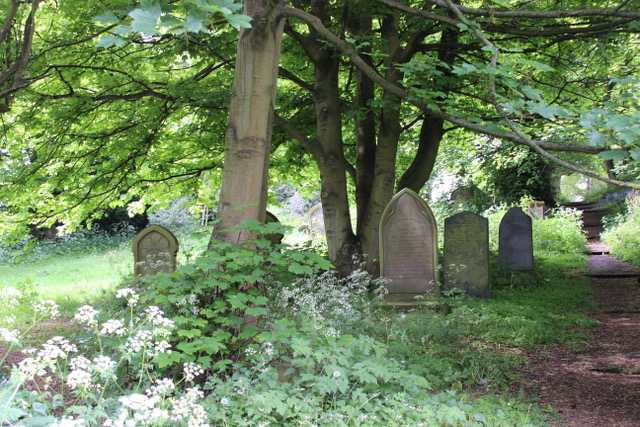
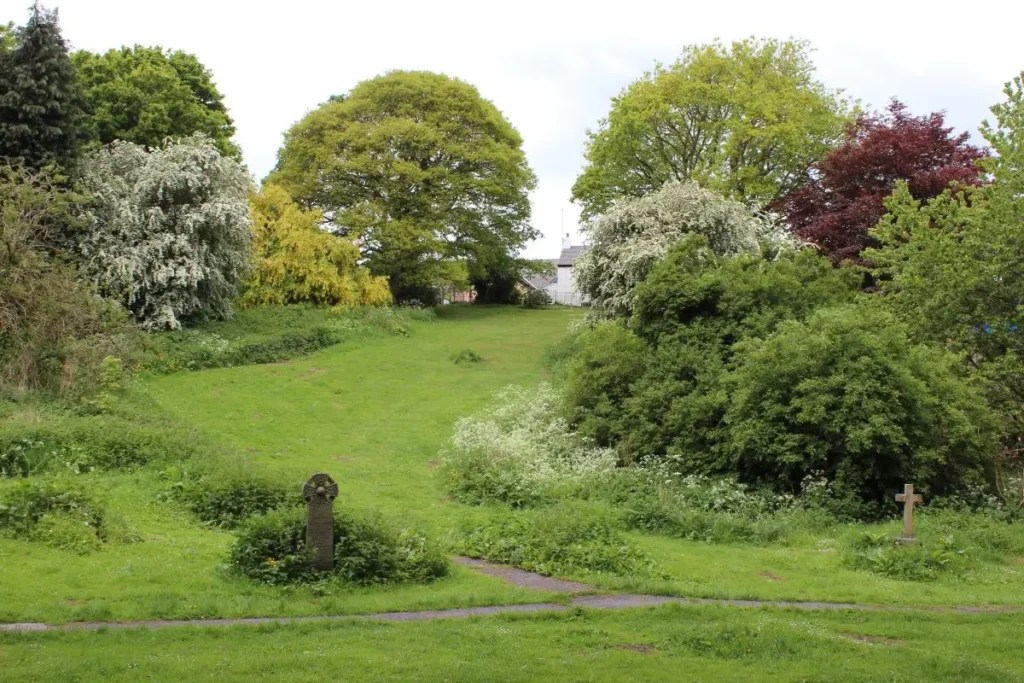
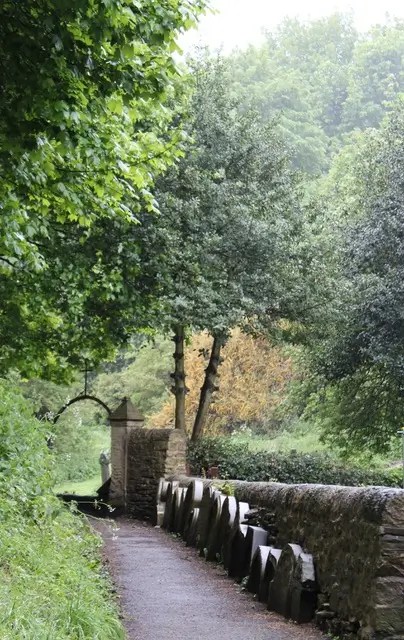
Durham City has a surfeit of three things: hills, woodland, and churches. The last two often go together, as several large churchyards within the city bounds provide growing space for small ‘consecrated’ woods. Durham’s hills – seven of them in 12 square miles – are unavoidable, and in my part of town we have the interesting phenomenon of a churchyard actually established on a hill, with all the challenges that must have brought for coffin-bearers and grave-diggers. It’s a big plot, with dense Victorian terraces on one side and a jumble of allotments on the other, and it must once have been a well-tended green pasture, a place of rest laid out between the busy life of redbrick streets and the worked earth of the gardens. It must have been a place of stepped paths, neat lawns, and ordered rows of gravestones.
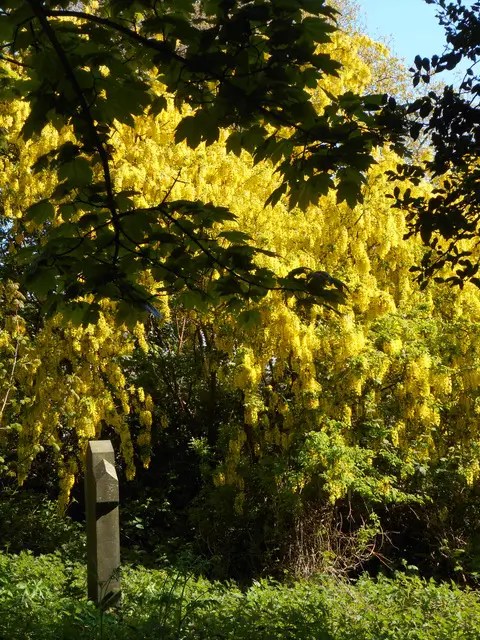
But 50 years ago, the churchyard was closed to burials, and as its care passed out of church hands the plots on steepest ground were ever more neglected. Now, most of the grave slabs have been moved to the boundary walls, and monuments have fallen or stand crookedly, and trees – young and old, native and alien, massive and modest – have replaced them as the dominant perpendiculars on the land. Many grow in what seem like family groups – elegantly aging oaks (though they are only teenagers in tree years), three towering ash trees, seedling sycamores and hornbeam, a few humble wych elm, and several stately but slender silver birch. There are notable specimen trees too – a brooding copper beech, its aubergine canopy a perfect foil for the creamy blossoms of hawthorns, a laburnum laden in spring with yellow ringlets, and a lofty and austere lone Scots Pine. Perhaps surprisingly, there are no yews, but there is a holly bush the size of a house.
So, in this place where memorials were installed with a sense of hoped-for permanence, it appears that the organic world is absorbing the ornamented stones, effacing the stonemason’s art. Within one copse, there still stands a very tall obelisk, a prestige grave-marker, competing with the trees for prominence. But its grandeur is gradually being lost as the trees outstrip it in height and grow dense around, so the ornate column becomes just another upright stem in the rank of trunks. And a strange melding of bark and rock occurs elsewhere, as a sycamore grows tight against a headstone, and year-by-year its rootstock grasps the granite plinth in a woody embrace.
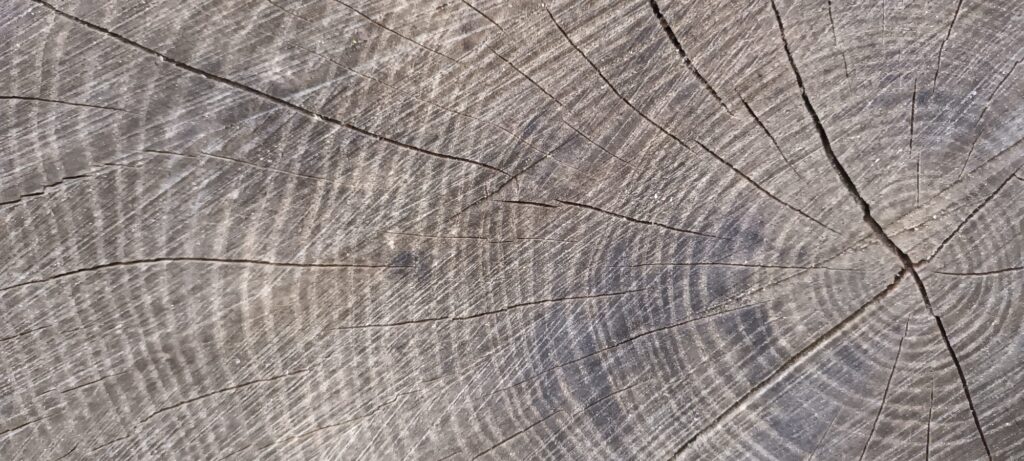
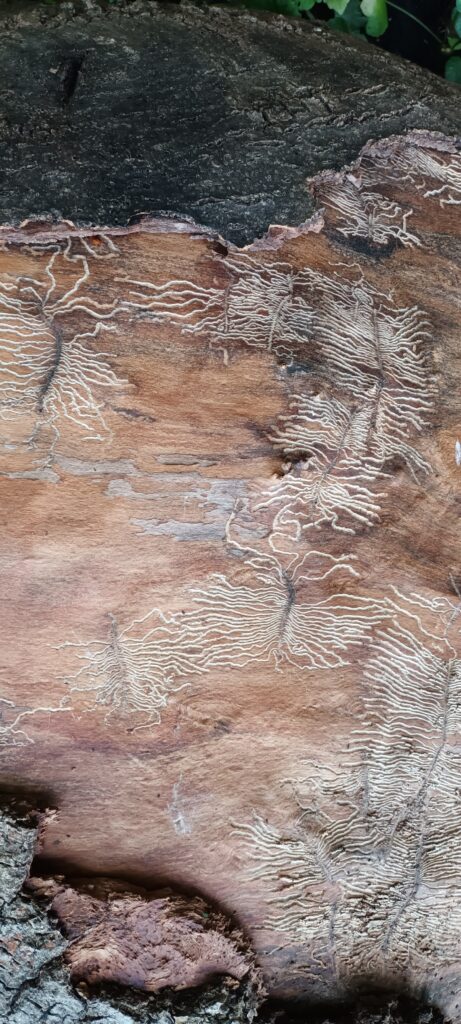
But trees can come to grief here too. An elderly ash lies prone after Storm Arwen, its inch-thick bark falling away to show the naked wood bearing the hazy inscriptions of bark beetle tracks. I counted 100 rings on the chain-sawed trunk. As this seedling ash took root Mary Forster (wife of John Forster, born 13th March 1842, died 11th August 1920) was here laid to rest. A century of burials and mourners, and the building of the vaults of a wooded cathedral.

City river, January
This January day the river runs in confident flow, not in spate or haste, but with a healthy surge. I’m encouraged by the companionable roar as it spills down the long arc of the weir; memories of moribund flows in a dry summer still linger, but today there’s a fizz to its fall at the dam. Its cascade is like a veil of icicles – not frozen, but there’s a crystalline whiteness in the waterfall which looks as chill as the air feels. A jumble of gentle peaks toss the glossy water, and the dark silk of its surface catches scraps of pearlised clouds and pale winter blue sky.
But the lively river here has no natural setting. The weir spans the river’s width beneath a slab of road bridge above, and its course is hemmed in by old warehouse walls and blank concrete banks. Yet the waters must be rich, still, despite their urban milieu; two cormorants perch on the dam wall and fan their broad wings, a goosander slips beneath the wavelets to fish, and at times – though not, alas, today – an otter will loop through the depths below.
Bluebells in the wood by the crematorium
Bluebells loose the beauty of phytology on a bounteous scale. Under the trees here, on the ground, there is a great intensity and density of blue. It’s like an artist or a child has decided “No! The earth is not going to be green or brown, it is going to be blue”. Here we have an inversion of the sky, or an ocean in the woods – and someone has thrown handfuls of white stitchwort among the blue as a show of clouds, or sea-foam.
Just beyond the trees and the blue-misted ground, the hum of the crem sounds; nature persists as people mourn, and dust returns to dust. Nature persists, and it can sustain (though this can be a tricky truth in the throes of grief).

Shetland sequence
I
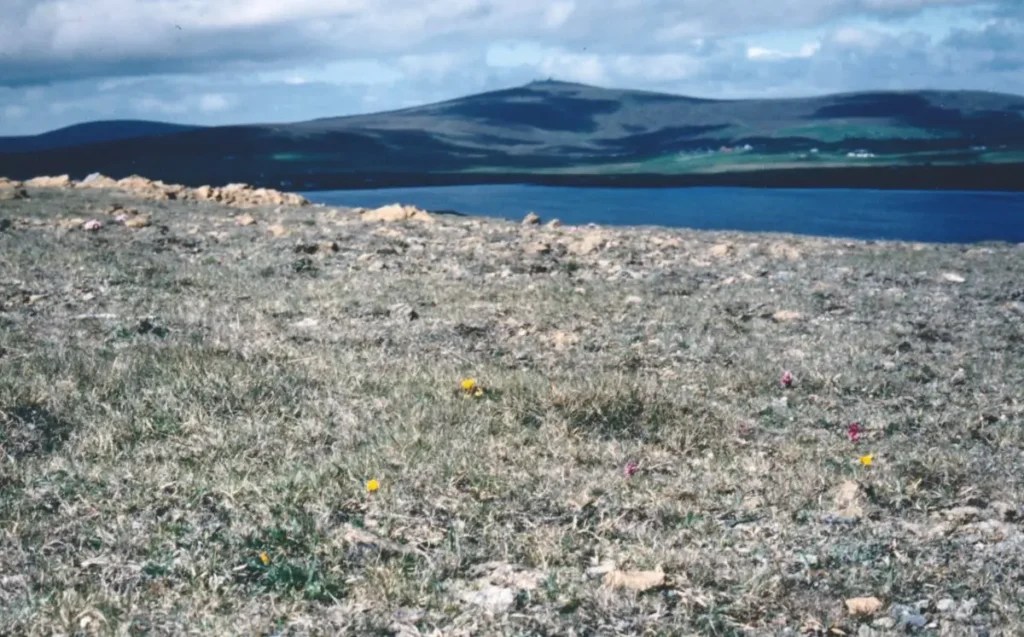
This rock sits before me and evokes a landscape I know, a rare and remote outcropping. My rock is a craggy piece of the earth’s crust, obviously not smoothed or pearlised or tempered by the sea, but raw and rough-hewn. Before I found it, it had sat exposed for 12,000 years on a plateau on a wind-lashed North Atlantic island. The name of the place I took it from is the Keen of Hamar and the island is Unst, the most northerly of the Shetland Isles.
‘The Keen’ is covered by a loose scattering of bare rocks, a vast post-glacial carpet of small angular stones. Geologists call it a debris-field, a term which accurately reflects its likeness to dumped quarry spoil. But tread the crunchy deposits and inspect the barren land close-to and you will find jewels among the rubble. In summer, diamond white stars and pinpricks of magenta appear over the stony earth – flowers, modest in size but revered for their scarcity. The bedrock of The Keen is known as serpentine, and it carries a legacy of heavy metals from its undersea volcanic origins. The nature and setting of this land, with its toxic burden and blighting by salt-spray and biting winds, is unique and inherently hostile to plant growth, so the small host of flowers which do survive here are special, bound to this place and few others.
My piece of serpentine, in its pointed austerity, conjures memories of hard ground, grand island horizons and fragile flora. It also makes me wonder about the ethics of lifting geology from the land; I can keep the memories, but perhaps it’s time to choose a summer and head north, renew my vision of The Keen and return ‘my’ rock to its natal home.
II
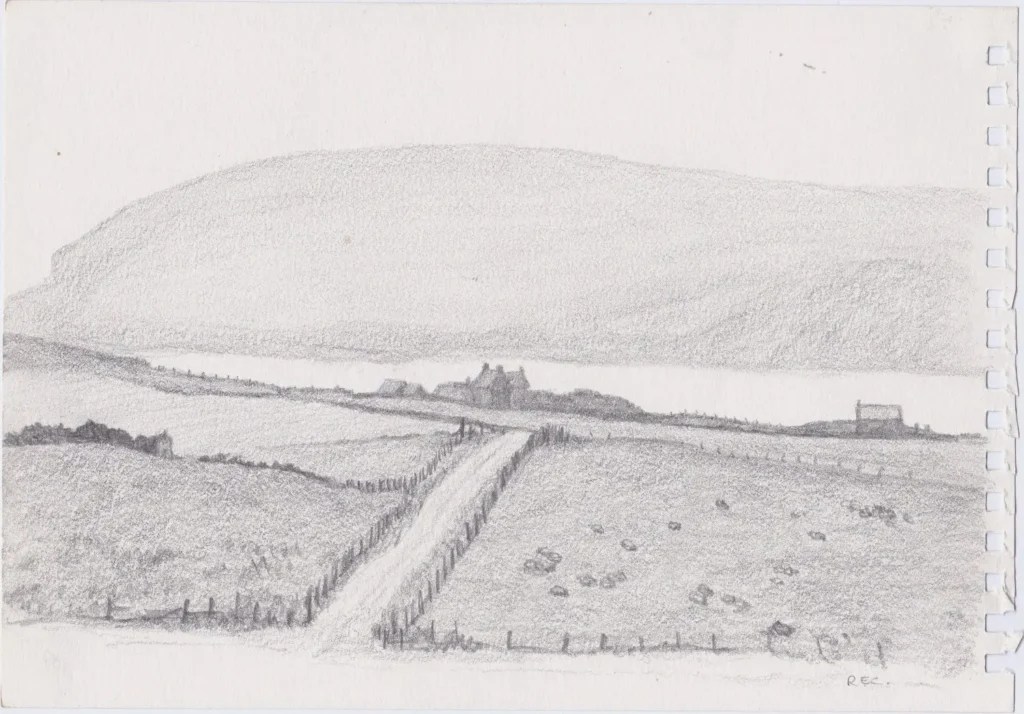
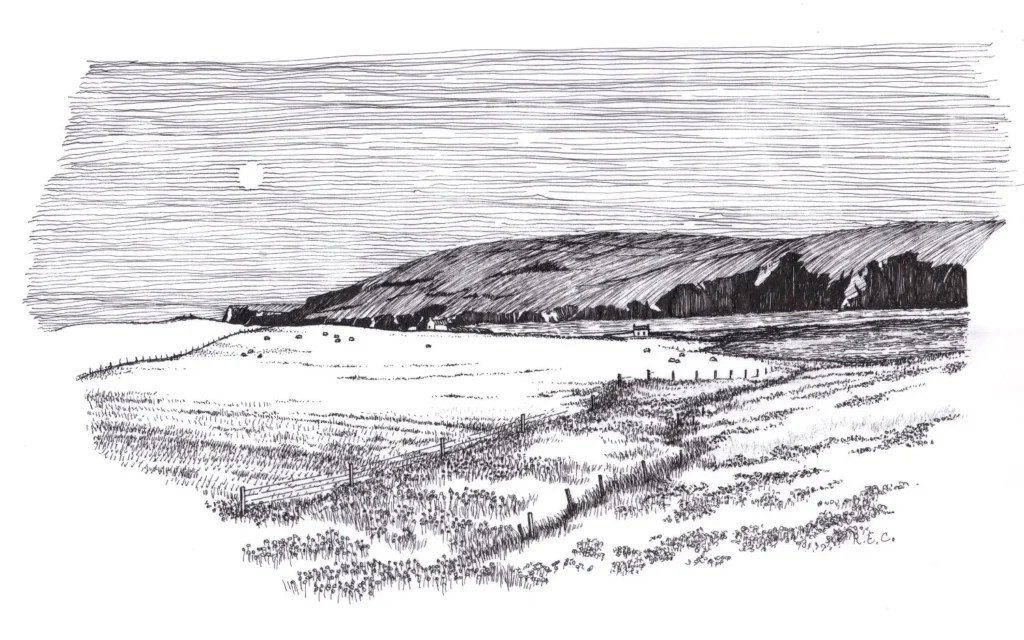
Thirty years ago, I lived for three months in a small, aged caravan, set next to a farm track and lashed down with guy-ropes to stop it bowling over the fields in marauding gales. On the other side of the track was the single-story homestead of the farm: the croft, white-washed with deep-set windows and a shallow pitched roof. Beyond the croft the unmade track curved faintly on through rough pasture and open heath – a flatness of grazing land, treeless and hedgeless. And beyond the heath, in all directions, the sea.
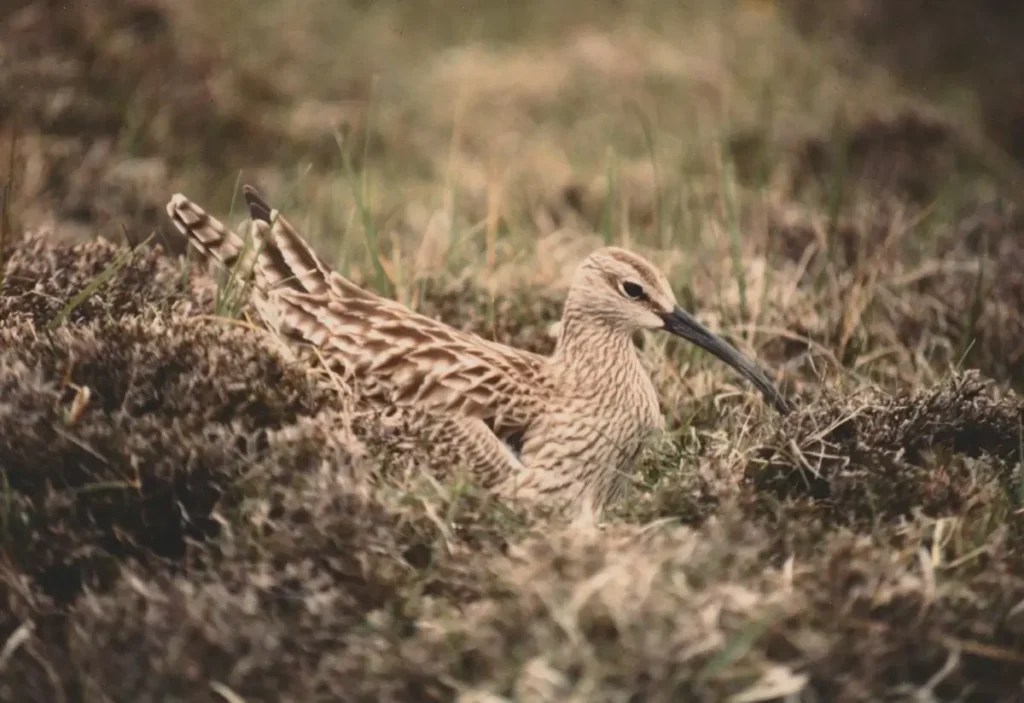
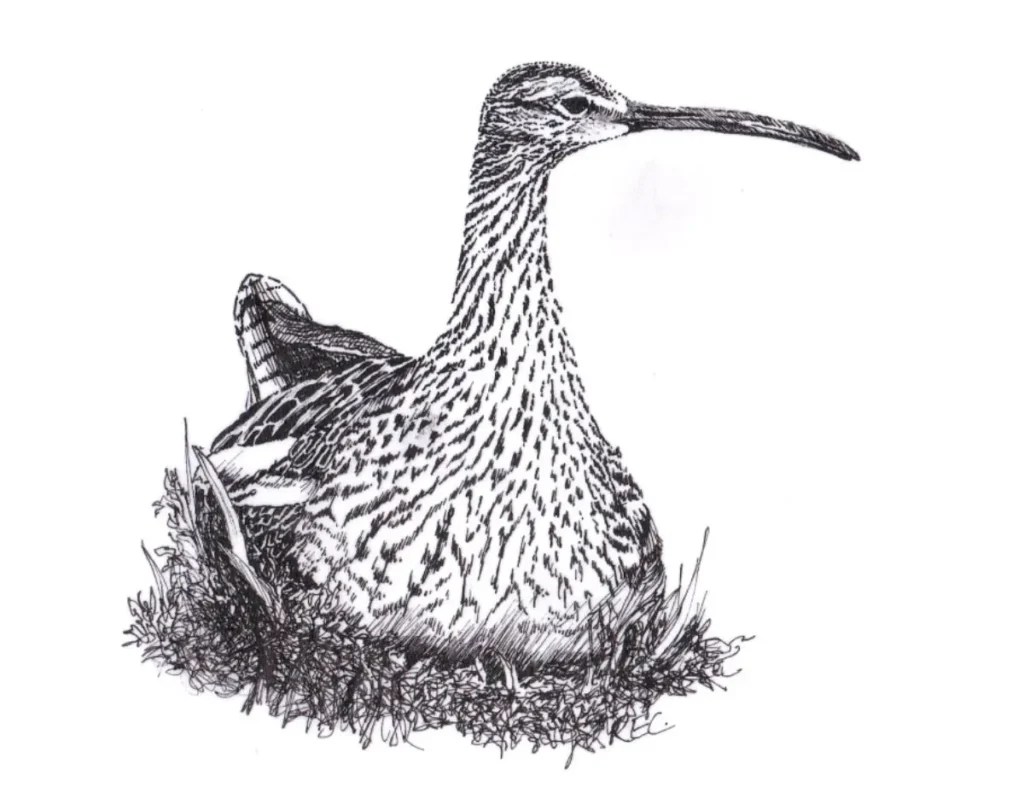
My home for those three months was Fetlar, last but one of the Shetland Isles as you head across the North Atlantic to Norway. Not long out of university, I was aiding a research student in his fieldwork on a bird rare in Britain: the whimbrel – a cousin of the curlew, as slender in legs and bill but more graceful in form and poise (perhaps as a whippet is to a greyhound). Three months: April, May, June. The three headiest months at high latitudes, when the darkness of winter daytimes is pared back and the sun asserts dominion over the night as well as the day, and birds lay claim to nesting rights across the waking land. I knew little of this before I arrived, of the low slabs of island rock held on the curved horizon of the sea, of the insistent, cleansing rush of ocean air, of the sudden brightness of cloud shadows clearing, when field and moor are struck with the truest hues of green and gold and brown. On this steely, bright skin of land, I set to work, and to learn.
My caravan window framed Fetlar’s south-west peninsular, a gradually rising narrow plinth above a wide curve of white sand, and behind this a plateau of fields, and ditches dotted with marsh marigolds. On days of mist, I could see only gray-scale tracings of the cliff, bay, and fencelines, and knew there’d be no chance for whimbrel watching. I still heard the birds though, their staccato trill lifting through the fog, less of a haunting song than the curlew’s, carrying more pique than pity. On fine and rainy – and always windy – days we scanned the moors and pastures, plotting whimbrel nests, showered by their calls and by the piping and pinking of other waders raising young on the heaths – plovers, oystercatchers, redshank, snipe and curlew.
I learnt that Shetlanders had their own names for these birds and for the seabirds massed around the coasts. Some of the dialectical forms are altered foreshortenings of the common name: so, a fulmar is a maalie. Some names reflect the character of the bird; the great skua, a barrel-chested, hook-billed seabird with piratical habits, is the ‘bonxie’. And several Shetland names are derived from the bird’s voice: an Arctic tern, with its grating two-tone rasp, is a ‘tirrick’; a curlew is a ‘whaup’, which captures perfectly the deep and slow, but rising note that is prelude to the liquid, looping cascade of its long song. A whimbrel, logically, is a ‘peerie whaup’, since peerie is the Shetland word for small, or little – an equivalence I realised early on, after puzzling over a place in Lerwick harbour called The Peerie Shop. (Was it a place to buy peeries? And if so, what was a peerie? Of course, I was soon told the translation was The Little Shop – but perhaps that doesn’t preclude that it was a place to buy small things).
Other Shetland bird names reflect the Scandinavian roots of Shetland dialect: oystercatchers, with their piebald plumage, are ‘shalders’, which comes from the Norse ‘sheld’ which means part-coloured. An intriguing link to Norse ancestry is found also in Shetlanders’ own names. Look at the ten commonest surnames in Shetland, and it’s easy to spot a pattern: the list includes Johnson, Williamson, Anderson, Jamieson, Robertson, Nicolson. These are patronymic surnames, whereby a child’s last name was derived from the father’s Christian name, and so the family name changed with each generation. This custom applied in Scandinavian countries from Viking times, and the persistence of patronymic naming in Shetland – adopted there until 1900 – is likely a legacy of Norse settlement in these north-facing isles.
On Fetlar, we visited crofts farmed by Andersons, Hughsons, Jamiesons and Thomasons (this family doubling the hereditary tribute by christening their first-born boys ‘Thomas’, all known thereafter as Tommy Thomason). And my caravan lodging was given by courtesy of Grace Anderson. She shared grazing land around her croft with her neighbour, Lolly. He and Grace were both in their late seventies, white-haired and gentle-voiced, and both single, despite the islanders’ long-held expectations that they might still, one day, marry. Both were still shepherding too, spending their nights in the barns and the close-to fields, attending expectant ewes. As spring progressed, the bleat of new mothers and their lambs joined the high calls of parent birds guarding their eggs and chicks on the moors.
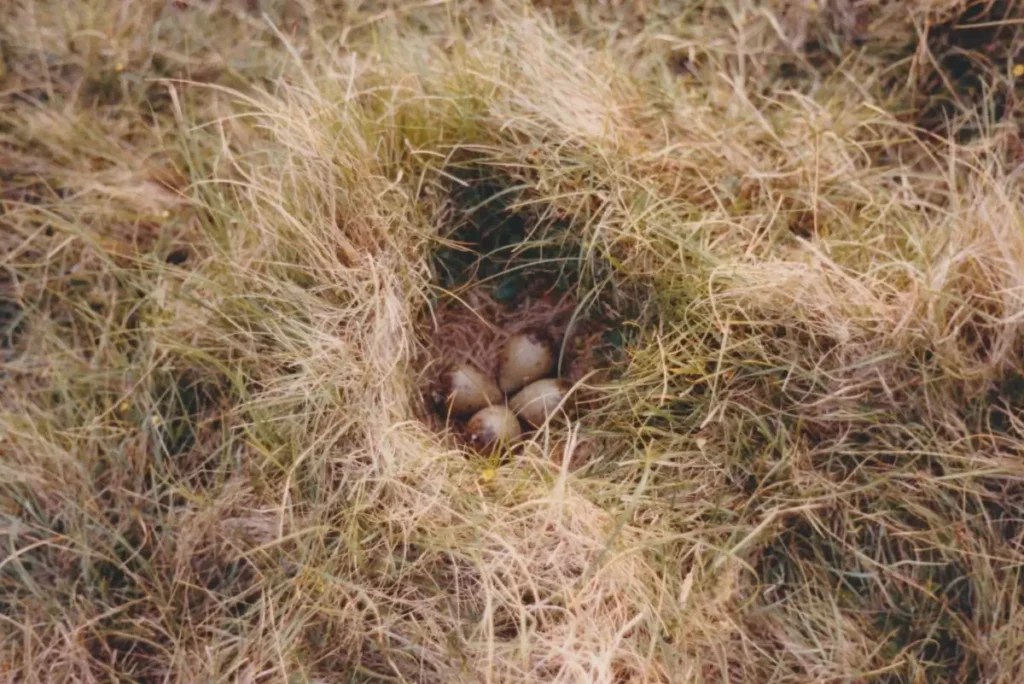
I was 75 days in the constant company of whimbrel. One season, observing their delicate courtship and devotion to raising the next generation. Their time there is precious. The males appear in late April, usually within a day or so of their arrival date the year before. They set up territory on the same land where they reared their brood in previous years, and there they wait for the return of their mates. On her arrival, the male will show her the nesting hollow he’s prepared, and if she accepts this simple nursery, she’ll lay usually four conical, olive-coloured eggs and both parents will share incubation. Ten weeks pass from the birds’ arrival to the fledging of the chicks, and in a further two weeks most birds will be flying south, heading to staging posts on migration to their winter grounds in Africa.
While whimbrels’ time on Shetland is short and prescribed, they will return. That June, I left Fetlar before they did, but I hope, like them, to return again, to hear them calling over the scant islands of the far, far north.
III
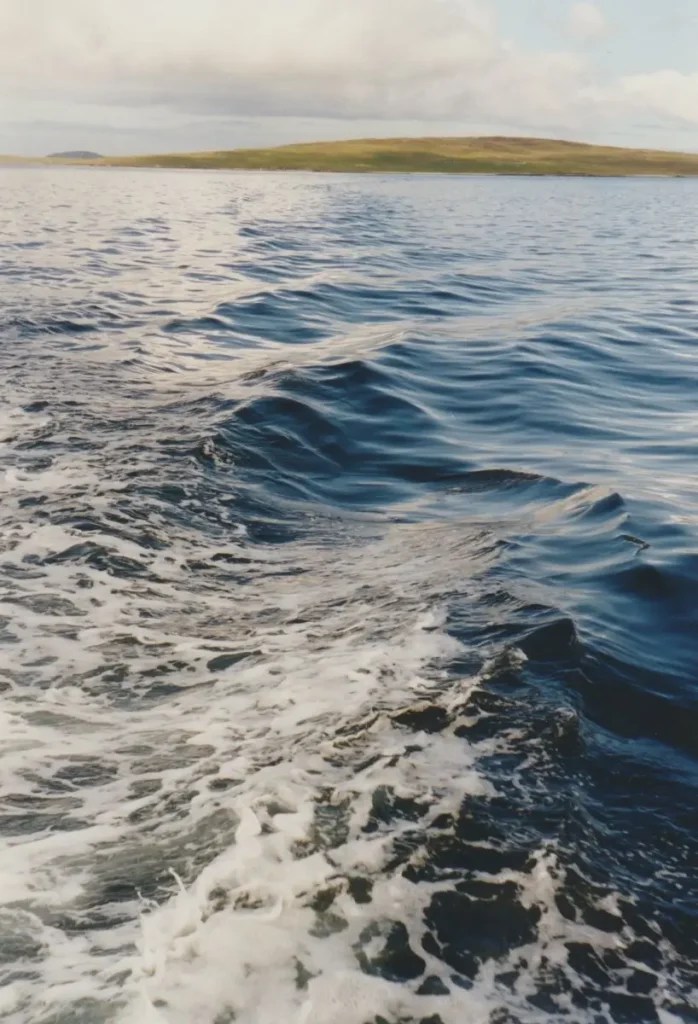
In 1988, three ferries of diminishing size and a trusty Landrover took me to Fetlar, nearly the most northerly island in Shetland. This was travel through skyscape and seascape, over slivers of land. What ground there was bathed bravely in the ocean, standing low but firm while washed by northern sun, mists and sharp-flung rains. All this I saw from boat or car.
What I felt, on foot and unsheltered, was the passion and fury of the island winds, plucking and grabbing wildly at every limb, at hats and collars and cuffs, turning steps into skips and smiles into stoical grins. You could try to fight the force of it, but that was what it liked, that was fun, to turn a walk into a wrestling match and raid your lungs for breath. There was nothing to do but humour and respect it, and once indoors, exhausted and exhilarated, gather strength for the same game tomorrow.
Because even safe within, you’d know the gale was still at play, careening over the low moors, chasing round the walls and making the house a-fidget, see-sawing between roar and rush and low thrum, picking at the window latches, flipping slates and – its favourite joke – hollering down the chimney stack. There was very little silence in island life. And as you walked the paths and coasts, you’d come to know this was the way of things this far north, know that the wind was married to the land and sea, and you couldn’t have the bare beauty of these both, or the towering clouds, without the whip and whirl and boom of moving air. And gradually, the more you walked, you’d hear the calls of nesting birds – curlew, redshank, gulls, guillemots – cutting through the bass notes of the wind; and the sea crashing at cliff-foot and shushing the sand in the bays.
Very little silence, then; but a chorus of elements and life. Returning ten years later, I anticipated these sensations and sounds of Fetlar with excitement. But the deepest affirmation that I was back at last came unexpectedly. On the quayside, opening the car window to feel the wind, I recognised in my breath the tang of peat- and salt-scented air: a memory I didn’t know I had.